Should we feed the birds? 5 bird feeding myths explained.

I started feeding the birds around twelve years ago, first out of a sense of duty and then, as more birds arrived, because I enjoyed knowing I was making a difference. So much of what we do in the name of sustainability happens out of sight or feels beyond our control. We recycle and make careful choices, and then we hope it helps. For me, feeding the birds feels different because you can see what happens next. You can see how often the birds come back and how they change throughout the year. You get to enjoy watching a busy feeder in a frozen garden and a fledgling being fed on the lawn in spring, and know that, in a small way, you supported it. At the same time, I think it’s natural to wonder whether we’re interfering. Feeding wildlife raises questions, especially when we hear about disease, and when you care, it’s natural to feel curious and to doubt yourself sometimes too.
People have been feeding birds for a long time. It began in the late nineteenth century and grew through the world wars, when food was scarce and winters were harsh. It expanded again as landscapes changed, hedgerows disappeared, and insects declined. Feeding birds has always been a response to loss, not a replacement for nature.
February is a funny month. Winter hasn’t quite finished, but something has begun to shift. By the end of the month, the sun rises almost an hour earlier and start. Despite that change in light, there still isn’t much food available for our garden birds.
Fat reserves built earlier in winter are now declining, and although daylight increases, warmth, and with it insects, is still some way off. This feels like a good moment to pause and think through some of the myths we often hear when it comes to feeding birds.
MYTH 1: FEEDING THE BIRDS SPREADS DISEASE
Now this myth needs addressing early because it can absolutely be true - but there is plenty we can do to prevent it. When you see a busy feeder, it can ring alarm bells. Disease in wild birds is a very real issue, and it’s natural to assume that bringing birds together must add to the problem. But disease exists in wildlife regardless of feeding. Any time animals congregate, the risk increases. If stopping feeding eliminated disease, we would also need to remove bird baths, cut back hedges, and prevent birds from roosting communally.
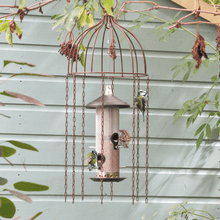
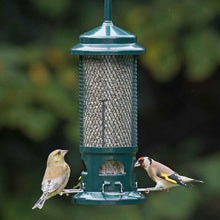
What actually helps is cleaning feeders, filling them with small amounts of food each day to keep it fresh, spacing feeding areas around the garden, and avoiding dense feeding stations. The goal is to reduce pressure, not remove support. Multiple feeders on a single pole concentrate birds in a way that wouldn’t happen naturally. Spreading feeders allows different species to use different areas and creates calmer feeding patterns.
I try to imagine how birds would feed naturally within a hedge. Some would flit around the top, others forage in the middle, and some lower down. We want to recreate something similar in our gardens where possible. Feeders should be cleaned weekly and taken apart for a thorough clean every fortnight, and bird baths should be disinfected too. If you're looking for a feeder that makes this easier, our BigEasy™ Hygienic Easy to Clean Bird Feeder is designed specifically to make regular cleaning simple.
The RSPB has stopped selling tray feeders because they are more likely to contribute to the spread of disease, so if you use a bird table or feeding tray, make sure it is cleaned frequently.
MYTH 2: FEEDING BIRDS ENCOURAGES AGGRESSIVE SPECIES
When I watch our feeders, some birds definitely look pushier than others. There’s a pecking order, and some birds take more than their fair share, forcing quieter birds away. But competition is normal wherever resources are limited. It changes constantly depending on season, time of day, and species.
Sparrows can exclude others from nest boxes. Great tits can be more dominant than blue tits. Starlings can take over an entire feeder for an afternoon. Pigeons can eat until they are more than full. None of this makes them “bad” birds. It’s how wildlife behaves at times of year when conserving energy really matters.
It’s taken me a long time to put aside my own interpretations of what’s going on. What looks pushy to me is actually just effective feeding. We can use feeding solutions that have been designed to give smaller birds a chance, but after that it’s about offering opportunity and trusting the birds to work things out for themselves.
MYTH 3: FEEDING BIRDS MAKES THEM RELY TOO MUCH ON US
When birds return to a feeder again and again, it can look as though they are relying on it completely - almost as if we might be teaching them bad habits. But we only ever see a snapshot of an animal that is on the move all day long. Wild birds are highly skilled at finding food, and that skill doesn’t disappear because a feeder exists. Birds still need a wide range of foods, many of which cannot be offered at a feeder. Insects, spiders, buds, and natural seeds all remain essential, especially outside winter. Birds move on quickly when food runs out and adjust their behaviour according to what’s available. Their survival depends on flexibility, and they are very good at it.
In spring, adult birds don’t feed chicks from garden feeders. They feed them insects and caterpillars. Feeding birds helps them manage energy in a landscape where natural food is less predictable than it once was.
MYTH 4: FEEDING BIRDS IS ENOUGH ON ITS OWN
Putting food out is a clear, positive action. It’s visible, immediate, and rewarding, but it is only part of the picture. Habitats such as hedging, trees, and shrubs provide nesting opportunities, shelter, and the insects birds need in spring. The most effective gardens offer both food and habitat. Feeding works best when it sits within a living garden, not when it is expected to do all the work on its own.
MYTH 5: ANY FOOD IS FINE
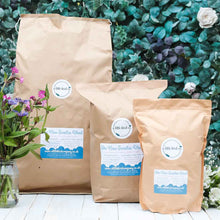
It’s true that doing something imperfectly is better than doing nothing at all, and big bags of cheap seed can feel generous. It’s easy to assume that more food must mean more help. But quality matters for birds in the same way it matters for us. Food that fills stomachs without providing proper nutrition leads to waste, unnecessary energy loss, and mess. Feeding better food usually means feeding less, not more. There’s also a wider impact to consider. Cheap mixes often rely heavily on wheat, which is grown, transported, and processed at scale, only for much of it to be ignored by garden birds. Our Seasonal Bird Foodis blended to give birds exactly what they need — browse our full bird food range to find the sized bag for your garden.
Thoughtful feeding reduces that waste and the resources tied up in it. Feeding birds can feel complicated when it’s broken down into rules and warnings. In reality, it’s much simpler. Birds are not fragile or passive. They are adaptable, skilled, and responsive to their surroundings. Feeding birds supports them at points when the landscape around them no longer does. In a countryside that has lost hedgerows, simplified woodland, and seen a long decline in insects, natural food is harder to find and less reliable than it once was. In that context, supplementary feeding is a lifeline. What matters is not whether we feed birds, but how thoughtfully we do it. Space, cleanliness, and quality all matter.
Feeding birds has always been a response to change, not the cause of it. When it’s done with care and understanding, it remains one of the simplest ways we can support wildlife and stay connected to it at the same time.
Ready to feed with confidence? Explore our Seasonal Bird Food, blended for nutrition, not bulk, or discover everything you need with our Bird Feeding Starter Set.