How to stop crows, jackdaws and magpies from eating all the bird food

The most common corvids found in the UK include the carrion crow, the rook, the jackdaw, the magpie, and the jay, and, like squirrels and starlings, they are able to use their cunning and dexterity to empty a bird feeder quickly, scaring away the smaller birds in the process.
Corvids are not all bad though - these intelligent birds play a pivotal role in maintaining ecological balance by scavenging carrion and preventing disease spread. Some corvid species aid in seed dispersal, contributing to forest regeneration, while others help control insect populations, offering natural pest control in gardens and farms. Their remarkable intelligence and problem-solving abilities have provided valuable insights into animal cognition and behaviour, enriching our scientific knowledge - they can use tools, understand cause-and-effect relationships, recognise human faces (and share information about us with one another), communicate in different dialogues, and even plan for future needs, showcasing a high level of cognitive flexibility.
That last point is worth thinking about for a moment. Corvids don't just recognise your face once - research has shown they hold grudges and pass warnings about specific humans to their flock, and that they remember the good too. I hear the jackdaws on our street caw to each other when I leave the house because they know I put out the bird food - I don't think I'm imagining it.
How to stop crows, jackdaws and magpies from eating all the bird food
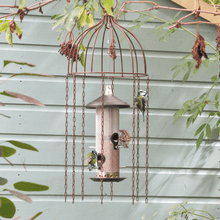
Your best solution is a Medusa Feeder Defender. While this simple yet effective feeder guardian won’t deny access to starlings and squirrels, it deters corvids who dislike the feeling of the hanging chains that surround your feeder of choice on their flight feathers, and will leave the food alone. The way it works is clever: a ring of hanging chains surrounds your feeder, and corvids dislike the feeling of those chains brushing against their flight feathers when they try to land. Smaller birds, which approach from below and are nimble enough to weave between the chains, aren't bothered at all. While this simple yet effective feeder guardian won't deny access to starlings and squirrels, it deters corvids who will leave the food alone.
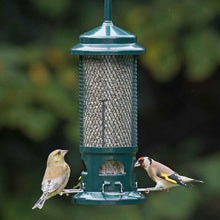
Corvids can also be deterred using the Squirrel Buster (although in our garden they have been known to dive bomb the weight activated Squirrel Buster to shake food free without resting their weight on the perches). I have had a lot of success deterring crows, magpies, jackdaws and squirrels, pigeons and starlings with the Starling Proof Bird Feeder Guardian, which is a set including a heavy duty cage, seed tray, rain guard and feeder with stainless steel perches. The cage works by size exclusion - it's simply too small for a crow or jackdaw to fit through, so only the smaller birds can reach the feeder inside. There's no trickery involved, just physics, and in my experience it's the most reliably effective option I stock.
Five tips to stop crows, jackdaws and magpies from eating all the bird food
I know how frustrating it is when the bigger birds seem to be eating all of the bird food. Here are five more tips to keep some food for the blue tits and robins.
The time of day makes a difference
In my experience, corvids tend to feed earlier in the morning and are less active in the middle of the day. Small birds feed throughout the day in shorter bursts. If you're finding the corvids are clearing out the feeders before the little birds get a look in, try filling feeders later in the morning rather than first thing. It's a small adjustment but it can shift the balance, particularly in winter when corvids are hungrier and more determined.
Think about feeder placement
Corvids are cautious birds despite their confidence. They prefer to have a clear view of their surroundings when they feed, which means open spaces where they can spot predators. Tucking your small bird feeders closer to shrubs or hedgerows plays to this instinct - the little birds feel safe there, but crows and jackdaws are more reluctant. It won't stop a determined corvid, but combined with other deterrents it tips the balance.
Try a feeder with short or no perches
Most corvids need something to grip onto while they feed - they're too big and heavy to hover or cling the way a blue tit can. Feeders designed with short perches, or without perches entirely, force birds to cling to the mesh of the feeder itself and flap their wings while they eat. Small birds manage this easily. Crows and jackdaws, built for strutting rather than acrobatics, usually give up and move on.
Avoid loose food on the ground beneath feeders
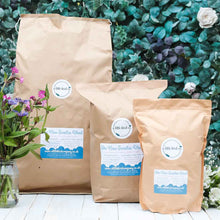
Spillage from hanging feeders inevitably ends up on the ground, and ground feeding is exactly where corvids are most comfortable. A seed tray fitted beneath your feeder catches the spillage and keeps it at feeder height, which is less appealing to crows and jackdaws. It also keeps the food cleaner and reduces the risk of attracting rats, which is a separate but equally unwelcome problem. Make sure you use a good quality blend of food which the little birds will finish off - cheaper blends get kicked or spat onto the floor. Try our seasonal bird food if you want to attract smaller birds and ensure there is no wasted food. One thing I've noticed in my own garden is that crows and jackdaws are much more comfortable feeding on the ground or from flat surfaces than clinging to a hanging feeder. If you're putting food out on a bird table or scattering it on the lawn, you're essentially rolling out the welcome mat for them. Moving the food you want small birds to have onto a proper hanging feeder is the simplest first step, and it does make a real difference.
Accept that coexistence is the realistic goal
There is no solution that will permanently remove corvids from your garden if they've decided they like it - and that's the way it should be. They're too intelligent and too persistent for that. What you can do is make the small bird feeders inaccessible enough that the corvids don't bother with them, while letting the crows and jackdaws exist in the garden on their own terms. Once I stopped trying to win and started managing the situation instead, the whole thing became much less frustrating - and I genuinely enjoy watching the jackdaws now.
We have a few free-access feeders in our garden, which the corvids enjoy using. Having one feeder just for the little birds has definitely changed the variety and number of small bird species we have visiting, though, which has been such a brilliant change to see. Do you have any other solutions to corvids in your garden? Send me a message to info@alittlebirdcompany.co.uk and share your tips!