The real reason garden birds are in trouble this summer

If you follow bird feeding news (and if you're reading this, you almost certainly do) you'll have seen the headlines in April 2026. The RSPB, Britain's largest wildlife conservation charity, announced that it is advising people to stop putting out seeds and peanuts between 1 May and 31 October. Cue significant uproar from the nation's estimated 16 million bird-feeding households, and a lot of understandably anxious messages from people wondering whether their feeders are doing more harm than good. I want to set out honestly where I stand on this, because I think the nuance has been largely lost in the coverage, and because we all deserve a straight answer rather than a reassuring non-response.
What the RSPB actually said
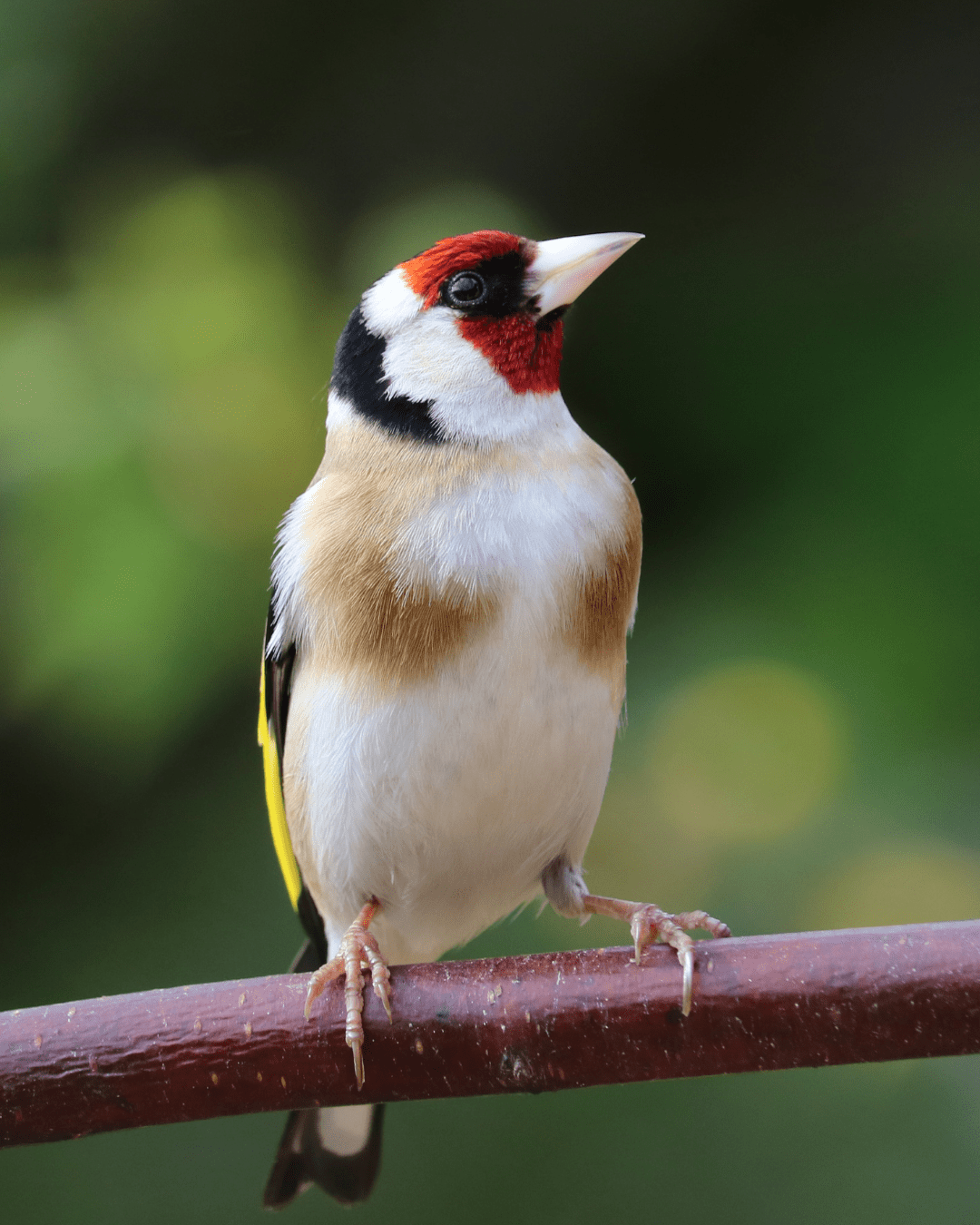
The RSPB's updated position, developed with scientists from the British Trust for Ornithology and the Institute of Zoology, is to "feed seasonally and feed safely." The reason behind the change is a disease called trichomonosis, caused by the parasite Trichomonas gallinae. The disease first emerged in British songbirds in 2005, and has since caused population declines of 62% in greenfinches and 37% in chaffinches between 2011 and 2021, resulting in greenfinches being added to the UK Red List of birds of conservation concern. RSPB The disease attacks the throat and gullet, making it impossible for affected birds to swallow food or water. It is devastating, and the concern is entirely legitimate. The evidence review found strong evidence that supplementary feeding promotes the spread of trichomonosis, with outbreaks peaking between July and October and more likely in gardens where larger numbers of greenfinches and chaffinches are present and where multiple types of seed are provided.
On the question of the science itself
One point that deserves honest acknowledgment: the RSPB's guidance is based on a literature review. It is a thorough and carefully conducted one, but it is a review document rather than a newly peer-reviewed study. The underlying science on trichomonosis and feeder transmission is well established and has been published in peer-reviewed journals over many years. Some of the specific findings that prompted the seasonal guidance, particularly the detection of the parasite on feeder surfaces, come from ongoing research that has not yet been fully published in peer-reviewed form. That does not mean the findings are wrong. It means there is more to learn, and the picture may become clearer as more data emerges.
What the data from that research actually shows
The detection rates are worth looking at carefully. In gardens where sick birds were already present, the parasite was detected in 1.88% of seed samples taken from feeders, that is, in 2 out of 106 samples. It was not detected at all in swabs taken from feeder ports or mesh. Higher detection rates were found in base trays and water baths, which points strongly to flat surfaces and water sources as the primary sites of transmission rather than hanging feeders themselves. Magnolia-platform This matters, because it suggests that how you feed, and in particular whether your setup avoids flat surfaces and whether your water bath is cleaned daily, may be more important than whether you feed during summer at all.
Where I think the guidance needs more context
I respect the science behind this, and feeder hygiene has always been central to everything I recommend. But there are important points that the guidance, and particularly the media coverage of it, has not addressed clearly enough. The RSPB's advice assumes that birds have access to sufficient natural food between May and October. For gardens surrounded by farmland, mature trees and wildflower meadows, that may well be true. For urban gardens in areas where insect populations have declined and green space is patchy, that assumption is far less comfortable. We are being asked to accept that the natural environment provides adequate alternatives at exactly the time when we know that insect populations and natural seed sources have declined significantly across much of the UK.
There is also a question about what happens if feeding is reduced in some gardens but not others. Vine House Farm Bird Foods, a leading bird food supplier consulted by the RSPB ahead of the announcement, pointed out that if only some households remove their feeders, birds may gather in greater numbers at remaining feeding sites, potentially increasing local disease transmission rather than reducing it.
Why spring is not the time to stop feeding
The breeding season is the single most critical time in the calendar for any bird species. Without successful broods of healthy chicks, populations cannot recover, and for birds already in decline, a run of poor breeding seasons can tip the balance very quickly. This is worth holding in mind when reading the RSPB's guidance, because the May to October window it recommends for pausing seeds and peanuts includes the heart of the breeding season. April and May are when most garden birds are nesting. June and July are when chicks are being raised and fledglings are finding their feet. These are the months when parent birds are working hardest, burning through energy at an extraordinary rate, and when the availability of reliable, high-quality food in their territory makes a real difference to how many young survive.
The argument that birds can find sufficient natural food during this period does not sit comfortably with what we actually know about the state of the natural environment. Insect populations have declined sharply across the UK over the past few decades. Urban and suburban gardens, which for many species now represent some of the most important breeding habitat available, are not reliably rich in the invertebrates and caterpillars that make up the ideal nestling diet. The birds are at your feeders in spring because they need to be there. If they had everything they needed elsewhere, they would not come to see us.
The bigger picture
The conversation around the RSPB guidance has focused heavily on greenfinches and chaffinches, and rightly so: the trichomonosis decline in those species is serious and well documented. But there are other birds visiting your garden that are in trouble too, and their difficulties have nothing to do with disease. House sparrows, tree sparrows, blackbirds, song thrushes and starlings are all in significant decline across the UK. The causes are not viral or parasitic. They are environmental: loss of nesting habitat, reduction in insect availability, changes in farming practice, urban development, and the kinds of large-scale landscape shifts that do not make the same headlines as a named disease but are just as damaging in the long run.
These birds are coming to your garden because the wider landscape is not providing what they need. The starling hunting for invertebrates in your lawn, the blackbird working through your borders, the house sparrows squabbling on the seed feeder: they are not there out of habit or convenience. They are there because your garden is part of what is keeping them going. Withdrawing supplementary food for these species during the months when they are breeding and raising young is not a neutral act. For birds whose populations are already fragile and whose natural food sources have been steadily eroded, a reliable feeder in a clean, well-managed garden is genuinely valuable. I think that is worth saying plainly.
What I recommend
I am not going to advise you to remove your seed feeders this summer. I do not believe the evidence as it currently stands justifies that, particularly for urban and suburban feeders where birds have fewer natural alternatives. What I do think is that every one of us should be taking hygiene more seriously than ever.
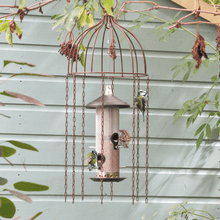
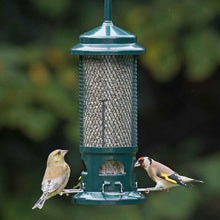
Here is what genuinely makes a difference: Clean your feeders every week without exception, including ports, mesh, and particularly any base trays. If your feeder has a tray attached to the bottom, remove it. Sick birds sit on trays for extended periods and contaminate them. Avoid flat feeding surfaces like bird tables for seed during the summer months. Change your bird bath water daily, scrub it as you go, and treat it as the highest-priority hygiene task in your garden. Move your feeders to a different location weekly. Feed to demand and put out only what will be eaten within a day or two, so food does not sit and accumulate.
If you see a bird showing signs of trichomonosis, lethargy, fluffed-up feathers, wet or matted plumage around the beak, remove your feeders and water sources immediately and clean everything thoroughly. Do not handle the bird directly. Report it to the Garden Wildlife Health project.
To read more about our reaction to the RSPB guidance, take a look here.