6 things we could do in the UK to protect wildlife (before we tell people to stop feeding the birds)

Every so often, a study comes out suggesting that garden bird feeding might be doing more harm than good - that it could be spreading disease, disrupting natural foraging behaviour, or creating dependency. The headlines follow predictably, and before long people who genuinely love and care for the birds in their gardens are left wondering whether they've been doing it all wrong. The RSPB announcement in April 2026 (advising against summer bird feeding) caused huge uproar in the press, and I understand why it landed as it did. The research deserves attention. But before we start pointing fingers at the people who love birds enough to fill a feeder every morning, it's worth asking what else is going on. Because there are other things we could be doing in the UK to protect wildlife. Some of them obvious, some hiding in plain sight in your garden centre, in the planning regulations, and possibly in the field next to your house.
Here are six things that I believe could make a real difference to our British wildlife.
1. Reform how pesticides are sold to home gardeners
There's a reasonable assumption that the most harmful pesticides, which are known to damage insect populations, have been banned in the UK. And for agricultural use, that's largely true. But the regulations for domestic products have sadly lagged behind. Some formulations that can't be used on farmland are still available on the shelf at garden centres, in packaging that doesn't make the risks particularly clear. Then there are the insect zappers, the UV light traps that hang from pergolas and decked areas, killing moths, beetles, lacewings and hoverflies indiscriminately throughout the evening, and in some cases through the day too. I find it genuinely difficult to get my head around the fact that something sold as a garden accessory is, in ecological terms, a machine that kills the insects that birds depend on. That's not a failure of individual intention; most people buying one have no idea. It's a failure at every level: in product marketing, in retail, and in public policy. Tightening pesticide licensing for domestic use and regulating the sale of broad-spectrum insect-killing devices would cost very little and help a lot.
2. Treat hard landscaping as the habitat loss it actually is
Sales of artificial grass in the UK have grown significantly over the past decade, and it's not hard to see why, because it looks tidy, it needs no maintenance, and it stays green through a drought. Paving and concrete have their own appeal too: low effort, clean lines, and no mud. But a garden laid with artificial turf, concrete or paving is, from a wildlife perspective, roughly equivalent to a car park, with far fewer opportunities for invertebrates, soil life and self-seeded plants. Multiply that across the millions of gardens that have been converted, and you have a cumulative loss of habitat that barely registers in public debate, yet is bigger, in scale, than almost any damage an individual feeder could do. Current planning policy doesn't address any of this in a meaningful way for domestic properties. A requirement for a minimum percentage of permeable, living ground cover, whether that's enforced through planning guidance for new builds or incentivised through the kind of green grants we already see in other areas of sustainability, would be a sensible and achievable start. It doesn't have to mean overhauling every garden in the country. It means new ones, going forward, being held to a basic standard.
3. Reform the Hedgerows Regulations (and actually enforce them)
Hedgerows are amazing things. They provide nesting habitat, food sources, shelter and wildlife corridors that connect fragmented patches of countryside, and we've known this for decades. They support more species of bird, mammal and invertebrate per metre than almost any other habitat type in the British landscape. And yet protection remains patchy. The Hedgerows Regulations 1997 were an important step, but they mainly apply to certain countryside hedgerows and depend heavily on local enforcement. Conservation groups have long argued that valuable hedges can still be lost through neglect, removal, or poor timing of cutting, while replacement planting and restoration often lag behind. It is hard to talk seriously about nature recovery while treating hedgerows as optional edges rather than essential habitat. Stronger protections, better enforcement, and more support for restoring and managing hedges well would benefit birds, pollinators, small mammals and the wider landscape at the same time. It would also reconnect nature across farmland, villages and suburbs, which is where much of the real pressure now sits.
4. Address glyphosate use in domestic gardens
Glyphosate (the active ingredient in products like Roundup) is the world's most widely used herbicide. The debate about its safety for humans has dominated the headlines for years, but the impact on wildlife is arguably just as significant and far less discussed. Glyphosate kills plants indiscriminately. That includes the dandelions, nettles, clover and wildflowers that are critical food sources for pollinators, and that in turn support the insect populations that birds, bats and hedgehogs depend on. It's widely available to domestic users - you can pick up a bottle from Tesco, and it's often positioned as a quick and easy garden maintenance product with no particular signal that it has broader consequences. While there's been increasing pressure on its use in public spaces and a number of councils have stopped using it on verges and in parks, it is still available for home garden use. Tighter restrictions on domestic sale, clearer labelling, and investment in public education about alternatives would help. It won't be a universally welcome message, but popularity and ecological importance have never been the same thing.
5. Extend biodiversity requirements to domestic planning
This one often surprises people. Larger developments in England are now required to deliver biodiversity net gain under the Environment Act 2021, meaning new builds need to leave the natural environment in a measurably better state than they found it. It's an imperfect system with its own loopholes, but the principle is sound and significant.
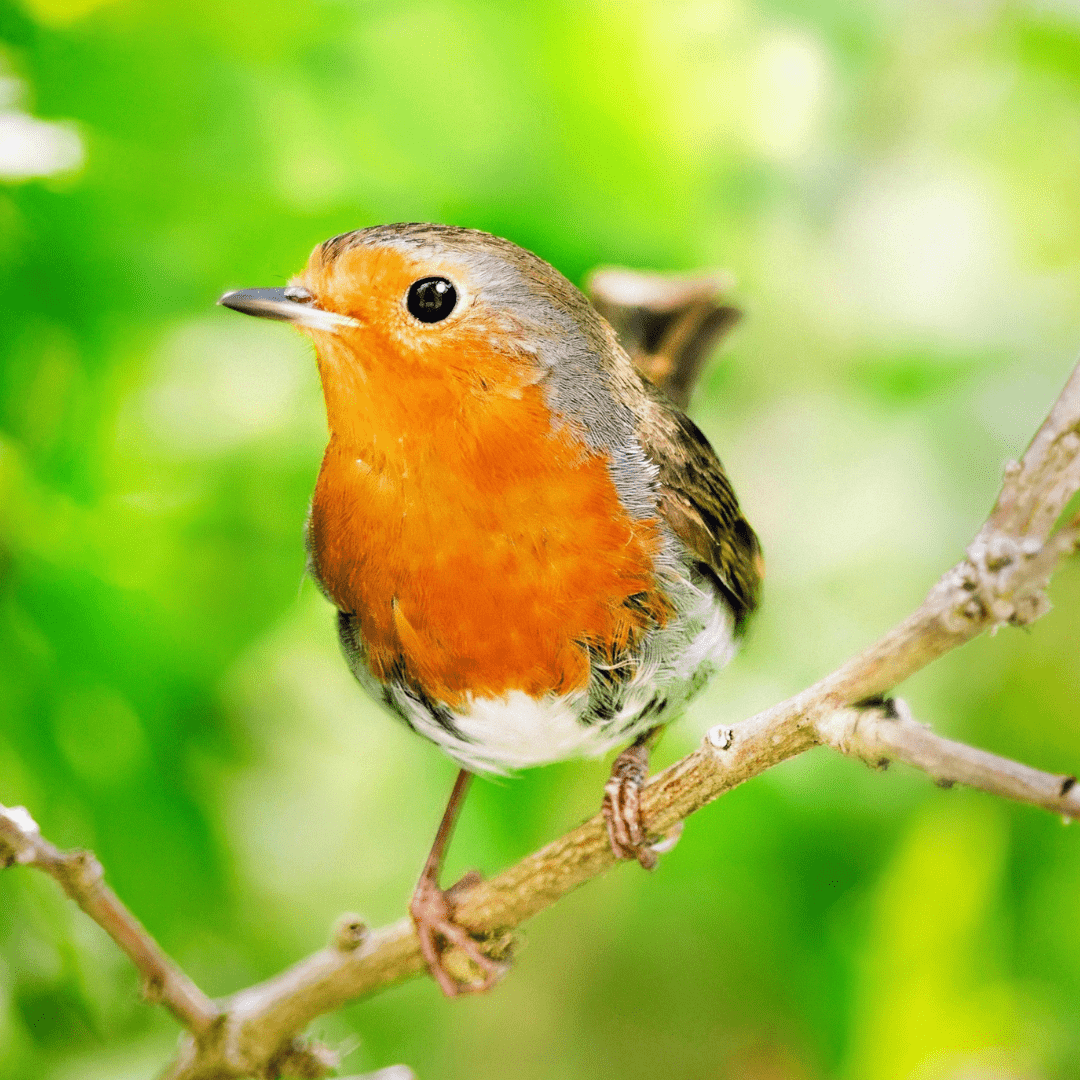
What's largely exempt, however, is small-scale domestic development like extensions, garden conversions, outbuildings, driveways. Individually these are small. Collectively, across millions of properties, they represent an enormous cumulative loss of habitat, particularly in urban and suburban areas where private gardens are one of the few remaining wildlife refuges. A garden that once supported a hedgehog, a nesting pair of robins, and a patch of flowering plants could easily be lost and built on top of. Extending the biodiversity net gain principle to domestic planning permissions, even in a simplified form, could shift the baseline expectation: that building or converting something in your garden shouldn't automatically come at an unacknowledged cost to the wildlife that was already living there.
6. Make wildlife-friendly features standard in new housing
This one feels refreshingly practical because the solutions already exist. Swift bricks, specially designed nesting cavities built into walls, can provide homes for Common Swift at very little cost when installed during construction. The same principle applies to integrated bat boxes and hedgehog highways, small gaps at the base of fences that allow European Hedgehog to move between gardens rather than becoming trapped in isolated plots. There has been growing political support for these measures, which is encouraging, but they are still far from universal. Given how inexpensive and straightforward they are to include at build stage, it makes sense for them to become a normal expectation rather than a welcome extra. Swifts have declined sharply in the UK over recent decades, and one reason is the steady loss of nesting spaces in modern buildings. If every new housing development routinely included swift bricks, basic bat provision and connected gardens for hedgehogs, the cumulative benefit could be substantial.
And now the thing I always hesitate to say
I want to be careful here, because the last thing wildlife conversation needs is to become a row between people who love birds and people who love cats. I do not want that, and I do not think it helps anyone. But it would be avoiding something real not to mention it. Cats do kill birds in the UK, and estimates run into the millions each year. The exact number is debated, and the science is more nuanced than many headlines suggest. Organisations including the Royal Society for the Protection of Birds have noted that there is no clear evidence that cat predation alone is the main driver of national bird population declines. Habitat loss, changes in land use, pesticides and wider environmental pressures matter enormously. But that does not mean cats have no impact. For individual birds, local populations, and nesting attempts, they plainly can. Research from the Universities of University of Sheffield and University of Exeter found that even the presence of cats near nests can increase risk, because alarm calls from parent birds may draw the attention of other predators such as crows and magpies. So this is not a story of cats versus birds. It is a story about responsible ownership sitting alongside wider conservation measures. Neutering, bells or brightly coloured collar covers, keeping cats in at dawn and dusk, and being mindful during the breeding season can all be part of the conversation. Loving your cat and caring about birds are not opposing values. But if we are serious about helping wildlife, it seems reasonable to include every meaningful factor in that discussion.
The good news is that none of the things on this list require a scientific breakthrough or a technological fix. They're waiting on political will, on clearer public communication, and on the cultural shift that's already well underway. The idea that a beautiful garden might also be a wildlife garden, with seed heads left standing into winter, native plants, a bit of long grass in a corner, a log pile and some bare earth has moved from the margins to somewhere close to mainstream in the past ten years. Garden design that was once dismissed as untidy is increasingly understood as intentional, and the designers, show gardens and media coverage have followed. Even the language has changed: where we once talked about "weeds", we're now more likely to talk about "wildflowers." That didn't come from legislation. It came from people deciding that they cared about what their patch of ground was doing in the world. There are around 87 million birds currently estimated to be in the UK. They need habitat, food, nesting sites, and insect populations to survive. We can feed them from our gardens (and I think we should) but we can also do a great deal more than that.
To read more about our thoughts on the RSPB guidance, take a look at our blog.