Small Birds, Big Superpowers: The Hidden Abilities in Your Garden

Both of my daughters are in a bit of a comic book phase at the moment - the stranger the storyline, the better. Secret identities, unlikely heroes, characters who look perfectly ordinary until you discover what they’re really capable of. It has made me realise how much we all love the idea of hidden powers. We are drawn to the thought that something small or overlooked might actually be extraordinary. And yet, every morning, there are birds outside our kitchen window quietly doing things that would sound completely implausible if they belonged in a comic strip. The tiniest birds have the ability to survive freezing temperatures, navigate the world, see and hear things we don’t even know exist and [add]. We don’t need capes or origin stories. The superpowers are already in the garden.
Extreme survival
By the time we reach late winter, our smallest garden birds have been balancing on a knife edge for months. Food has been harder to find, daylight has been limited, and every long night has required careful management of the fat reserves they built earlier in the season. Take the goldcrest. It weighs less than a pound coin, yet on a long winter night it can burn up to 20% of its body weight simply staying alive. If a 70 kilogram adult did the same, they would need to eat 14 kilograms of food overnight just to wake up again in the morning. When you look at a goldcrest through that lens, it becomes much harder to see it as “tiny” and much easier to see it as mighty and feisty. They often roost together in dense foliage or small cavities, pressing close to conserve warmth, and the difference that makes is measurable. Two birds together reduce heat loss by a quarter, three reduce it by a third, and survival, at that scale, is often about cooperation as much as endurance. Blue tits rely on a different adjustment. On freezing nights they fluff their feathers, increasing the layer of insulating air around their bodies and reducing heat loss. Great tits, meanwhile, must eat roughly 30% of their body weight each day simply to maintain condition, which goes some way towards explaining their persistence at the feeder at this time of year.
Super senses
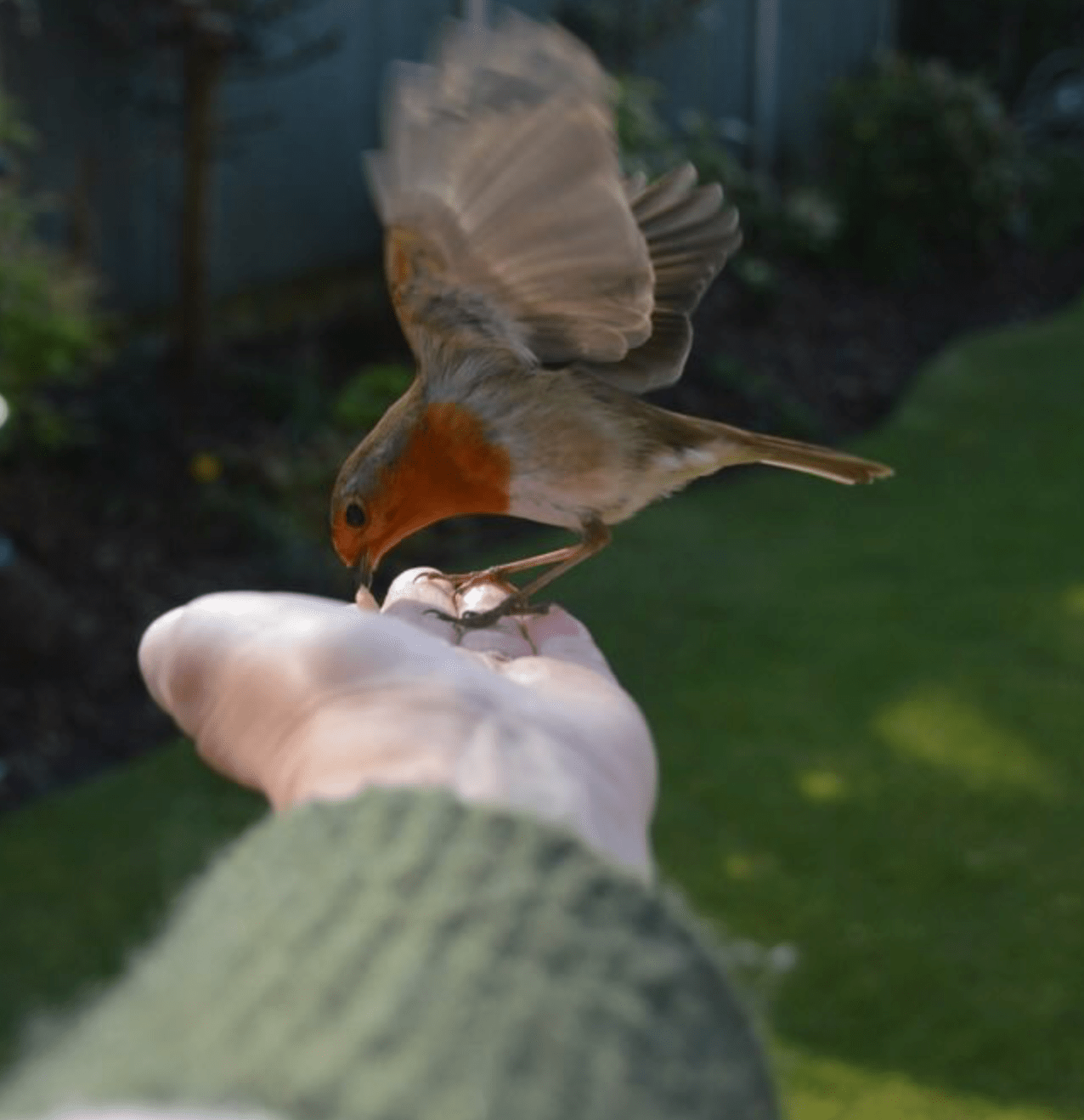
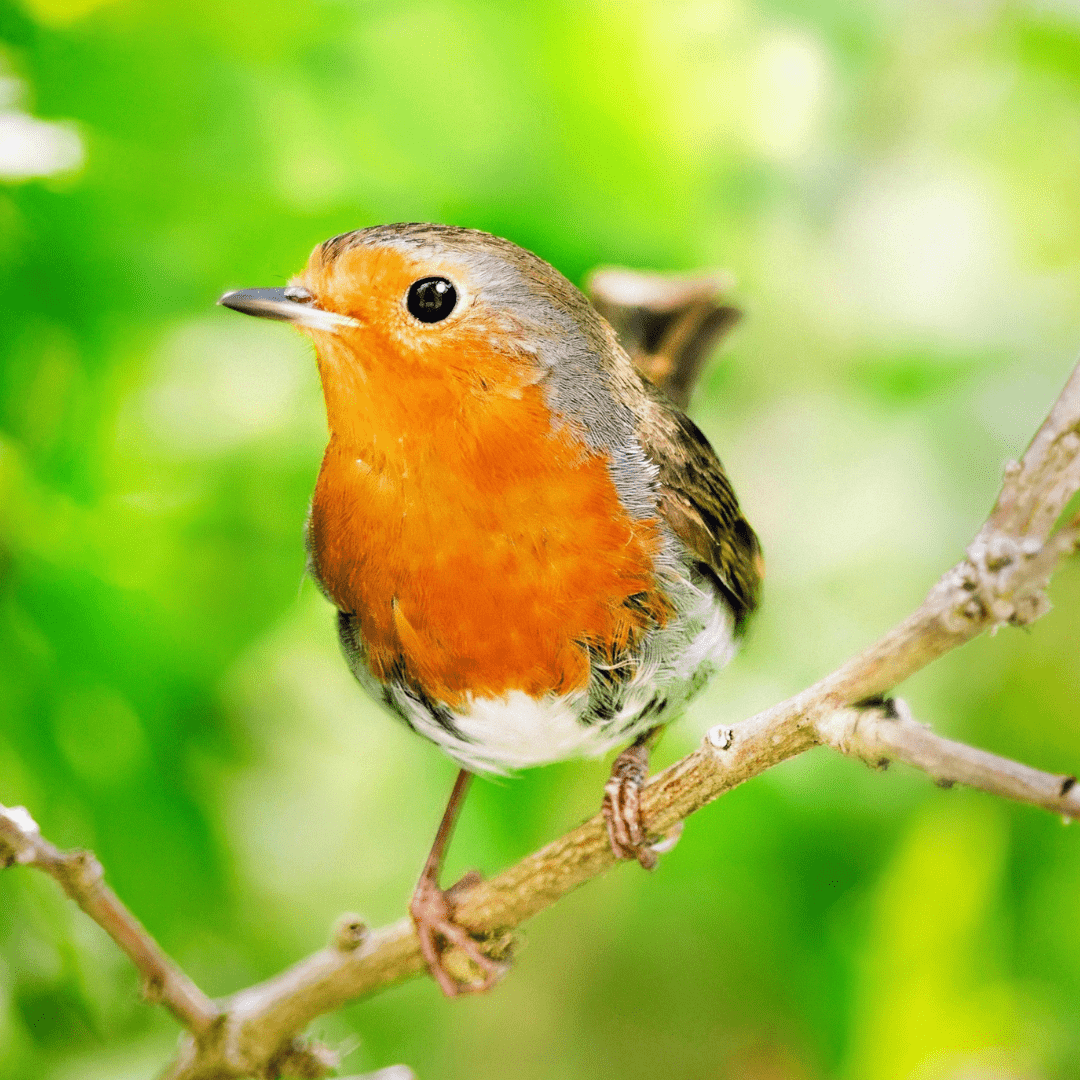
If surviving winter shows how tough birds are, their senses show how much more of the world they’re experiencing than we are. When I watch a robin on the lawn and see that familiar head tilt, it can look as though he’s studying me, but in reality he’s listening. Robins (right) can hear earthworms and other invertebrates moving beneath the soil, building up a mental picture of what’s happening underground before they strike. What looks like still grass to us is full of movement to them. Kestrels experience the world differently again. They can see ultraviolet light, and vole urine reflects UV, leaving visible trails across grassland. What appears empty to our eyes carries clear information for a hunting bird. Owls rely on sound to an extraordinary degree too. In barn owls, the ears sit at slightly different heights on the skull, which allows them to judge the exact position of prey even in complete darkness. A mouse moving under snow or leaf litter can be located without being seen. Then there’s the woodcock, whose eyes sit so far back on its head that it has almost complete all round vision, meaning it can feed while still watching for danger behind it. The more you learn about bird senses, the more you realise our gardens aren’t quiet at all. We’re just not tuned into the same signals.
Built to thrive
Some of their abilities are structural rather than sensory. The great spotted woodpecker strikes wood at up to 20 pecks per second, generating forces that would cause serious concussion if we tried the same thing. Woodpeckers manage it because their skull contains shock absorbing bone, and their tongue, which is far longer than it appears, wraps around the back of the skull to provide additional support. It’s such an effective system that engineers have studied it when designing protective headgear. Nuthatches (left) demonstrate a different kind of specialism. They’re the only British birds able to walk headfirst down tree trunks, gripping bark securely in both directions. That ability gives them access to insects and seeds that other birds may miss. And then there are swifts. On summer evenings I love watching them above our garden, moving at speeds of up to 69 miles per hour in level flight. They eat, drink and even sleep in the air, and when they return each year they’ve travelled from sub Saharan Africa in bodies that weigh little more than a bar of chocolate. Once you know that, it’s impossible to watch them without thinking about the distance they’ve covered to get here.
Not such a bird brain!
For a long time, birds were assumed to be simple. The research now tells a very different story. Jays store thousands of acorns in autumn and can remember many of those hiding places months later. If another bird observes them caching food, they sometimes return later to move it, which suggests they understand they’ve been watched. Magpies have passed mirror recognition tests, indicating self awareness, and crows can recognise individual human faces and remember them for years. In controlled experiments, some have bent wire into hooks to retrieve food from containers, shaping a tool to solve a specific problem rather than simply using what’s available. There’s also evidence that close relatives of our Eurasian jay can store particular foods in places where they anticipate needing them later, which points towards an ability to plan ahead. Even a starling murmuration reflects coordinated decision making. Each bird tracks a small number of neighbours and adjusts its position almost instantly, resulting in those shifting patterns at dusk. There’s no leader directing the movement. It emerges from thousands of rapid, individual responses. The more you look at the detail, the harder it becomes to dismiss birds as unintelligent.
Extreme endurance
Migration adds another layer to this picture. A willow warbler weighs around 12 grams, yet twice a year it travels from the UK to sub Saharan Africa and back. It navigates using the position of the sun, the stars, recognisable landscapes and the Earth’s magnetic field. The journey is deliberate and repeated year after year. Birds use a combination of cues to find their way. They read the position of the sun during the day and the stars at night. They recognise coastlines, rivers and mountain ranges, building a map of the landscape as they travel. Many species can also sense the Earth’s magnetic field through specialised cells linked to their eyes and beaks, which helps them maintain direction even when visibility is poor. It’s a layered system of navigation, refined over generations. The blue tit at your feeder has survived freezing nights by carefully managing its energy. The robin on your lawn is detecting movement beneath the soil that you cannot hear. The swift overhead may have crossed the Sahara before returning to your street, and there’s nothing ordinary about that.
Instead of seeing garden birds as background to our lives, we can start to see them as highly capable, resilient creatures sharing our space. The more we notice, the more impressive they become. And once you start looking at them that way, it is hard to stop.