Your questions about the RSPB's bird feeding guidance, answered honestly

A customer got in touch this week to check whether she needed to bring her feeders in when the weather turned warm, and put them back out when there was a cold snap. She had understood the guidance to be about temperature. She is not alone in that, and it is not her fault, because the facts have been blown out of proportion by the press and the advice has become genuinely confusing. So I thought the best thing we could do was gather up the questions I've been asked, answer them as honestly as I can, and give you something you can come back to.
I don't represent the RSPB. I sell bird food, I love birds, and I have a vested interest in you continuing to feed them. I think it is important to say that upfront. But I also think the nuance in this story has been badly served by the headlines, and that a lot of people are about to stop feeding garden birds unnecessarily, which will not help anyone, least of all the birds.
Do I need to bring my feeders in when the weather is hot and put them out if there's a cold snap?
No. The guidance is not about temperature at all. The RSPB's recommendation to pause seeds and peanuts between 1 May and 31 October is based on when trichomonosis outbreaks are most likely to occur, which research has shown peaks between July and October. It is a calendar-based, seasonal recommendation, not a weather-based one. Your feeders do not need to come in on a warm day in April, and a cold snap in August does not mean it is safe to put seeds back out under the current guidance.
That said, there are practical reasons to think about temperature in relation to your feeders. Fat balls and suet products can melt and go rancid in very hot weather, so in a heatwave it is worth putting out smaller quantities and checking them more frequently. But that is a food freshness issue, not a disease one.
So what is the guidance actually saying?
Should I be putting out mealworms and suet?
On suet: yes, you can put it out, but it does spoil in heat, so in warm weather it’s worth putting out smaller amounts and checking it more frequently than you might in winter. I’m hoping to offer a seasonal suet block in the coming months that’s formulated with this in mind, so watch this space.
On mealworms: this is where I’m going to be a little bit contrary. Dried mealworms are widely recommended, including in some of the guidance around the current RSPB advice, but I’m not personally a fan. The drying process strips out most of their moisture content, and there’s a real risk that birds (particularly chicks) end up dehydrated as a result. Soaking them first is often suggested as a fix, but in warm weather soaked mealworms spoil very quickly and can actually become a hygiene risk in their own right.
Live mealworms are a much better option. They retain their natural moisture, they’re exactly the kind of food parent birds would be seeking out naturally during the breeding season, and chicks handle them far more easily. My hesitation around stocking them has always been the packaging - most live mealworms come in a significant amount of single-use plastic, and I haven’t yet found a supplier whose packaging I’m happy with. I’m still looking, and when I find the right one I’ll stock them.
In the meantime, it’s also worth knowing that you can grow your own mealworms at home quite easily and cheaply, and there are some good guides online if you want to give it a try.
How many feeders actually tested positive for the parasite during the study on which the advice was based?
This is one of the questions we think deserves more attention than it has received in the coverage. The research that informed the guidance involved swabbing feeders and surfaces in gardens where sick birds were already present. In those gardens, the parasite was detected in 2 out of 106 seed samples taken from feeders. That is a detection rate of 1.88%. Swabs taken from feeder ports and mesh (the parts birds actually make contact with when feeding) returned zero positive results. The higher detection rates were found in base trays and water baths. Base trays, where sick birds tend to sit for extended periods and where saliva and droppings accumulate, showed a 19% detection rate. Water baths showed 24%.
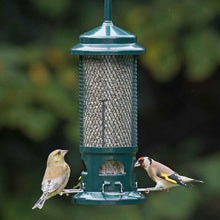
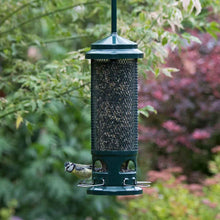
What this tells us is that the primary risk is not the hanging feeder itself. It is flat surfaces and standing water. If you remove your seed tray, clean your water bath daily, and keep your feeder ports clean, you are addressing the actual transmission risk far more directly than simply removing seeds for six months.
Does that mean the RSPB guidance is wrong?
Not exactly, but we do think it is broader than the evidence strictly requires, and we think the framing has caused more alarm than the data justifies. The guidance is based on a literature review, which is a careful and thorough piece of work, but it is a review document rather than a newly peer-reviewed study. The specific feeder-swabbing research that contributed to it has not yet been published in peer-reviewed form. That does not mean the findings are incorrect. It means the picture is still developing, and some of the strongest conclusions have been drawn ahead of the full evidence being available for independent scrutiny. There is also the question of what happens when only some households follow the advice. If a proportion of gardens remove their seed feeders and others do not, birds may simply concentrate at the remaining feeding sites in greater numbers, which could, in theory, increase local transmission risk rather than reduce it. This point was made by Vine House Farm Bird Foods, a supplier that was consulted by the RSPB before the announcement, and it is a reasonable one that has not been widely discussed.
Should I stop feeding the birds from May onwards?
This is your decision, and I am going to give you an honest answer rather than just tell you what you want to hear. If you have seen sick greenfinches or chaffinches in your garden, or if you live in an area where trichomonosis has been active, following the RSPB's seasonal guidance is a reasonable precaution. The disease is real, the declines are serious, and reducing congregation at feeders during peak outbreak months is a logical response. If you have not seen sick birds, if you feed in a clean and well-managed way, and if you are in an urban or suburban area where birds have limited natural food alternatives, I do not believe the current evidence requires you to remove your seed feeders. What it absolutely does require is that you take hygiene seriously. The birds visiting your garden during spring and summer are mostly there because they need to be. House sparrows, starlings, blackbirds and thrushes are all in significant decline, and their difficulties are environmental, not disease-related. The breeding season, from April through to July, is the most critical time of year for any bird species. Withdrawing food during those months is not a neutral act for birds that are already struggling.
What should I actually be doing differently?
Quite a lot, as it turns out, but none of it is complicated. Remove the tray from the bottom of your feeder if it has one. This is probably the single most impactful thing you can do, given that base trays showed the highest detection rates in the research. Sick birds sit on trays, drool contaminated saliva, and create exactly the kind of reservoir the disease needs to spread.
Clean your feeders every week, properly. Take them apart, scrub them with a mild disinfectant solution, rinse thoroughly and let them dry before refilling. Pay particular attention to ports and mesh where debris accumulates. Move your feeder to a different spot in the garden each time you clean it. This prevents a build-up of contaminated debris on the ground below. Do not use flat feeding surfaces like bird tables for seed during the summer months. The same logic applies as with base trays: flat surfaces accumulate contaminated material and sick birds tend to sit on them. Clean your bird bath every single day if you can. Empty it, give it a scrub, refill with fresh tap water. This is the part of garden bird care that most people do least consistently, and the data suggests it may be the most important. Feed to demand. Put out only what your birds will eat in a day or two. Old, damp, accumulated food is exactly the environment the parasite thrives in.
If you see a bird with signs of trichomonosis; lethargy, fluffed-up feathers, wet or matted feathers around the beak, obvious difficulty swallowing — remove feeders and water sources immediately, clean everything, and report it to the Garden Wildlife Health project at gardenwildlifehealth.org.
Is the food I'm buying from you safe?
Yes. Trichomonosis is not carried in fresh, properly stored bird food. It is transmitted between birds through saliva and droppings at shared feeding and watering points. The risk is in how food is presented and how feeding areas are managed, not in the food itself. Buying good quality, fresh seed and keeping your feeders clean is exactly the right approach.
Will you be changing what you sell?
I will not be withdrawing seeds or peanuts from our range (and neither has the RSPB), and I will not be advising you to stop buying them for the breeding season. We will continue to be honest with you about the guidance as it develops, and if the peer-reviewed research changes the picture significantly we will tell you that too.
What I am doing is making hygiene guidance much more prominent across everything I put out, because I think that is where the real difference can be made. The birds need your feeders. They need them to be clean. Those two things are not in conflict.