5 things you might not know about the collared dove


2 min read

Collared dove, a pale grey UK garden bird

Collared doves are so common that we forget how recently they arrived. Their journey across Europe is one of the fastest bird invasions ever recorded.

1. Nobody in Britain had seen one before 1952

The first collared dove in the UK was recorded on 14 May 1952, and the first breeding took place in 1956. The species appeared in the Balkans between 1900 and 1920, then spread rapidly north-west, reaching Germany by 1945 and Ireland by 1959.

2. Fewer than fifty birds colonised a continent

Fewer than 50 collared doves escaped from captivity in Nassau in the Bahamas in 1974, and their descendants spread across North America at about 100 kilometres a year, more than double the speed seen in Europe.

3. They breed almost all year

A pair lays two white eggs, which hatch after 14 to 18 days, and the young fledge after 15 to 19 days. Three or four broods a year is common, and up to six have been recorded. Like all pigeons and doves, the parents feed their chicks on crop milk.

4. Their name means eighteen

The scientific name decaocto is Greek for eighteen, and it imitates the call. In a Greek myth, a maid paid only 18 silver coins a year begged the gods to make her plight known, and was turned into a dove who still calls out her wages.

5. They were once called the Turkish dove

In the nineteenth century most of the species' European range lay in the Ottoman Empire, which is why many European languages call it the Turkish dove. A wild collared dove lives for about three years on average, but one lived for more than 13 years and 8 months.

A note on the call

The collared dove's call is a three-syllable goo-GOO-goo, which is quite different from the wood pigeon's five-note coo. The collared dove is also smaller, slimmer and much paler, with a narrow black collar.

What collared doves like to eat, and where

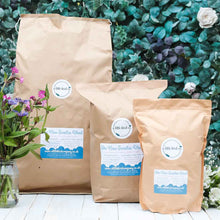
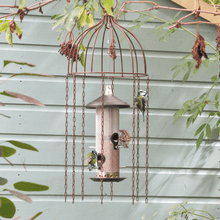
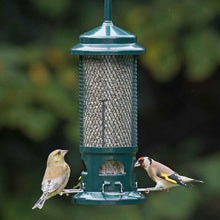
Collared doves feed on grain and seed, and like a wood pigeon they gather where food is easy. If a flock is emptying your feeders, our Medusa Defender is designed to stop pigeons and other larger birds reaching hanging feeders. Fill a Little Lantern seed feeder with our seasonal bird food for the smaller birds. If you are not sure which feeder suits your garden, our feeding quiz will point you in the right direction.

Want to keep track of the collared doves in your garden? Amidst the Birdsong: A Garden Birdwatcher's Journal is made for exactly that.

Want to read about more garden birds? See all the birds in this series.

Clare Cahill

Thank you for reading!

Clare Cahill is a bird enthusiast with a passion for observing and learning. While she definitely doesn’t have a formal degree in ornithology, Clare has dedicated hours to reading birding books and exploring nature, constantly expanding her knowledge and deepening her love for wildlife.

For Clare, birdwatching brings a sense of calm and connection to the world, offering a peaceful escape from the hustle and bustle of everyday life. She believes that the more we connect with nature, the more we can do to protect and conserve it. Through her writing, Clare hopes to inspire others to take a moment to pause, look up, and appreciate the calm and connection that comes from letting a little wildness into our everyday lives.

The seasonal bird food brand

We're a little company, supporting little birds. Find out more about what sets us apart.

  • What to feed the birds in summer

    Seasonal

    Birds have different dietary needs throughout the year, from nesting to moulting and surviving colder months. To support these changes, we’ve created seasonal blends – order a Seasonal Bird Food bag, and we’ll adjust the blend to match the season, making it easy to do something great for the birds.

  • Child holding bag of seasonal A Little Bird Co. bird food.

    Sustainable

    Sustainability is at the heart of everything we do. We don't farm, process, and transport cheap filler ingredients that birds simply kick to the floor. Instead, we focus on premium ingredients they love. Our packaging is compostable, and our bird feeders and nest boxes are tested for durability and longevity.

  • Songbird

    We design our food and select our range of feeders with little birds in mind. Every ingredient in our blends is chosen because small birds love it, simplifying your bird feeding routine. Our feeders provide safe access to food while helping to keep out larger, more dominant species. Look out for robins, blue tits, wrens, finches and more visiting your garden for our food.

  • Support

    With birds in your garden, you’re never alone - they’re the friends who always visit. Feeding them supports wildlife conservation while bringing joy and calm. Whether spotting a new species or simply watching their daily routines, just ten minutes a day strengthens your connection with nature and boosts your wellbeing.

1 of 4

When life feels busy, the birds keep it simple.

There’s something lovely about how feeding the birds becomes part of the rhythm of your day. A scoop of seed, a clean dish of water - and then a pause, just to watch who turns up. It doesn’t have to take long, but those moments can be surprisingly grounding. A little burst of mindfulness, fresh air, a chance to notice your garden as it changes throughout the seasons, and the cheerful flutter of wings - it’s good for the soul.

Join our flock of bird enthusiasts who share a passion for sustainable and thoughtful bird feeding.

Shop our bestsellers

From our popular seasonal bird food to the Squirrel Buster squirrel resistant bird feeder, our range is designed to help you to create a haven for little birds in your garden.

1 of 5