5 things you might not know about the magpie

Magpies split opinion, but they are some of the cleverest birds in our gardens, and a good deal of what we think we know about them is wrong. Here are five things that might change how you see them.
1. They don't steal shiny things, so why do we think they do?
The idea that magpies steal anything shiny runs through British, French and Italian folklore, and inspired Rossini's opera The Thieving Magpie and a Tintin adventure. Then researchers at the University of Exeter put shiny objects such as foil and silver rings beside piles of nuts. In 64 trials with wild magpies, a shiny object was touched just twice, both times a silver ring that was quickly dropped, and the captive birds never touched any object. The magpies were wary of anything new, shiny or not, and fed less near it. The reputation seems to owe more to superstition: the folklorist Steve Roud points out that large black birds such as crows and ravens are seen as evil in British folklore, and the magpie appears to have been tarred by association.
2. They recognise themselves in a mirror
Magpies are one of only a few species known to pass the mirror test, which checks whether an animal understands that the reflection is itself. In the classic experiment a coloured mark was placed on the throat where the bird could only see it in the mirror, and the magpies tried to remove it.
3. Their brain is built like a chimpanzee's
A part of the magpie brain called the nidopallium is about the same relative size as in chimpanzees and humans. A 2004 review suggested that corvids, the crow family, match great apes in areas such as social cognition and causal reasoning.
4. One nest held 1,500 metal spikes
A magpie nest in Antwerp was reported to contain 1,500 sharp metal spikes, apparently used to deter predators. Magpie nests are domed, with a single well-hidden entrance, and are built in tall trees.
5. Their black is not black
The head, neck and breast are glossy black with a metallic green and violet sheen, set against a pure white belly. More than half of a magpie's 44 to 46 centimetre length is tail. Life is hard: in a study near Sheffield only 22% of fledglings survived their first year, though the oldest recorded magpie reached 21 years and 8 months.
A little magpie folklore
Most of us know the rhyme One for Sorrow, which links the number of magpies you see to what will happen next. It has many regional versions, and nobody is sure how seriously anyone ever took it. People say that if you see a lone magpie you should greet it to ward off bad luck, and in Shropshire the greeting involved spitting on the ground three times. If you would like to say hello properly, our Hello Mr Magpie greetings card, illustrated by Barley Designs, does it for you.
A nineteenth-century saying holds that a single magpie in spring, foul weather will bring. In Scotland a magpie near a house window was said to foretell a death, in Hungary its chatter meant guests were on the way, and in Sweden magpies were linked with witchcraft.
The bird was once simply called the pie, from the French. The Mag was added later, and may come from Margaret, because its chatter sounded like idle talk. Shakespeare called it the magot pie in Macbeth in 1606. You can read more in our animal superstitions post.
What magpies like to eat, and where
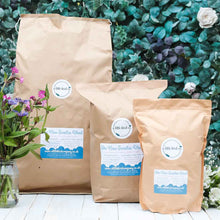
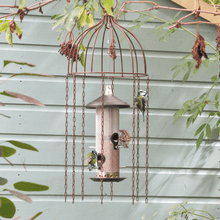
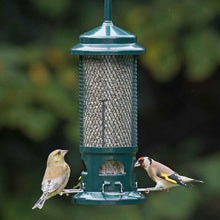
Magpies are omnivores and bold visitors to feeders, and they will empty one quickly. If you would like the smaller birds to get a look in, our Medusa Defender is designed to stop magpies, crows, jackdaws and pigeons reaching your hanging feeders. Fill a Little Lantern seed feeder with our seasonal bird food for the birds underneath it. If you are not sure which feeder suits your garden, our feeding quiz will point you in the right direction.
Want to keep track of the magpies in your garden? Amidst the Birdsong: A Garden Birdwatcher's Journal is made for exactly that.
Want to read about more garden birds? See all the birds in this series.